
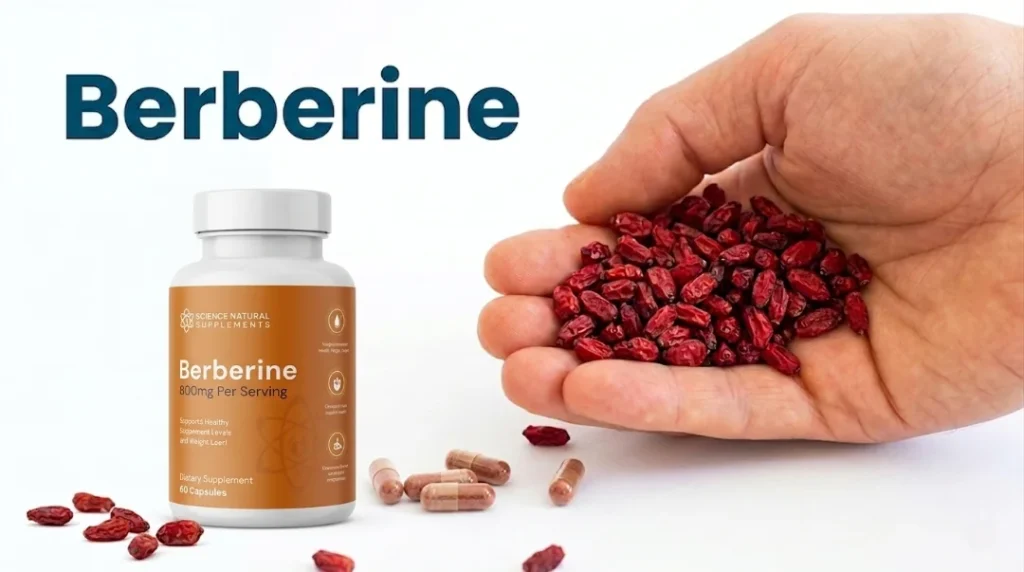
Berberine has earned the title “nature’s metformin” — and unlike most supplement marketing claims, this one has serious science behind it. A bright yellow alkaloid extracted from plants like barberry, goldenseal, and Oregon grape root, berberine has been used in traditional Chinese and Ayurvedic medicine for over 2,000 years. Today, dozens of peer-reviewed clinical trials confirm its effects on blood sugar, fat metabolism, gut health, and cholesterol — making it one of the most research-backed natural compounds available in 2026. This guide covers what berberine actually does, what the research confirms, what side effects to genuinely expect, and exactly how to take it.
What Is Berberine and What Is It Used For?
Berberine is a plant-derived alkaloid — not a synthetic compound — found naturally in the roots, bark, and stems of several medicinal plants. Modern research has validated its use across four primary areas: blood sugar regulation, weight and fat metabolism support, cholesterol and triglyceride management, and gut microbiome health. Some studies have also explored its relevance for PCOS, where insulin resistance plays a central role in hormonal imbalance and weight challenges.
What makes berberine genuinely interesting to researchers is not that it does one thing well — it is that it influences multiple metabolic systems through a single core mechanism. Understanding that mechanism explains why its benefits extend so broadly.
How Berberine Works — The AMPK Mechanism
Berberine’s primary mechanism is AMPK activation — adenosine monophosphate-activated protein kinase. Think of AMPK as the body’s metabolic master switch. When it is active, cells shift from fat storage mode into fat-burning mode, glucose uptake improves, and insulin sensitivity increases. This is the same pathway activated by exercise and by metformin, the most widely prescribed diabetes medication in the world.
Beyond AMPK, berberine reshapes the gut microbiome — increasing beneficial bacteria like Akkermansia muciniphila and reducing pro-inflammatory strains. This matters because gut bacteria directly influence how the body processes glucose, regulates appetite, and manages systemic inflammation. A 2025 multi-omics review published in Metabolites confirmed berberine’s multimodal role in obesity management through these combined pathways.
Berberine Benefits — What the Research Confirms
| Benefit | What the Research Shows |
|---|---|
| Blood Sugar Regulation | Most consistently demonstrated benefit. Clinical trials show berberine lowers fasting blood glucose by 20 to 25% — placing it in the same conversation as prescription antidiabetic drugs. Achieves this by improving insulin sensitivity and slowing carbohydrate breakdown in the gut |
| Weight & Fat Metabolism | AMPK activation signals the body to burn stored fat rather than accumulate more. Research supports modest but meaningful weight loss — particularly in people with insulin resistance, where metabolic improvements compound over consistent weeks of use |
| Cholesterol & Triglycerides | Reduces LDL cholesterol and triglycerides through bile acid signalling and liver enzyme activity — independent of AMPK. Not as potent as statins, but produces clinically relevant lipid improvements in people with borderline elevated levels |
| Gut Health | Actively reshapes gut microbiome composition — increasing beneficial bacteria, reducing inflammation, improving nutrient absorption, and supporting healthier appetite regulation |
| PCOS Support | Studies show improved menstrual regularity, ovulation rates, and insulin response in women with PCOS — where insulin resistance is a central driver of hormonal and weight challenges |
Berberine Side Effects — Honest Expectations
The most common side effects are digestive — stomach discomfort, bloating, loose stools, or mild nausea, particularly in the first one to two weeks. These typically resolve as the body adjusts and are significantly reduced by taking berberine with meals rather than on an empty stomach. Starting at a lower dose — 500mg once daily — and increasing gradually also minimises early digestive sensitivity.
Less commonly, berberine can cause low blood sugar in people already taking glucose-lowering medications. This is not a side effect of berberine alone but a drug interaction risk that requires medical awareness. At studied dosages up to 1,500mg daily for several months, clinical trials have not recorded significant changes in liver or kidney parameters in healthy adults.
Is Berberine Safe? Kidney and Liver Facts
The kidney and liver safety question is one of the most searched concerns around berberine — and the answer is nuanced rather than binary.
Kidneys: For healthy adults, berberine at standard doses does not appear to harm kidney function. It is primarily metabolised by the liver and excreted through bile and the gastrointestinal tract rather than the kidneys. However, people with existing chronic kidney disease should consult a doctor before use — reduced kidney function affects how compounds accumulate in the body and how medication interactions play out.
Liver: A 30-day randomised crossover trial published in NCBI found no statistically significant changes in liver markers (AST, ALT, bilirubin) at 1,000mg daily compared to placebo — with some participants showing a modest improvement in AST, suggesting a potential hepatoprotective effect. That said, individuals with diagnosed liver disease should not take berberine without medical supervision, as impaired liver function affects its metabolism directly.
The following people should avoid berberine entirely or only use it under medical supervision: pregnant or breastfeeding women, infants and children, anyone taking metformin or insulin, those on blood thinners or immunosuppressants, and people with diagnosed liver or kidney conditions.
How To Take Berberine for Best Results
The clinically studied protocol is 500mg of berberine HCL taken two to three times daily, totalling 1,000mg to 1,500mg per day. Take each dose 15 to 30 minutes before meals — this timing directly targets the post-meal blood sugar spike that drives fat storage, which is the central mechanism the research validates. Starting at 500mg once daily and increasing over one to two weeks helps minimise early digestive adjustment.
Many practitioners recommend cycling — eight weeks of consistent use followed by a two-week break — to maintain the body’s long-term responsiveness. Meaningful metabolic changes typically appear after 60 to 90 days of this consistent approach, not within days of starting.
For those ready to explore a quality-verified berberine HCL supplement, visit Go Health Reviews — Berberine for full product details and current availability.
Final Verdict
Berberine is one of the most genuinely researched natural compounds for metabolic health in 2026. Its AMPK-driven effects on blood sugar, fat metabolism, cholesterol, and gut health are supported by a body of clinical evidence that most supplements simply cannot match. It is not a replacement for prescription medications in serious medical conditions — and it is not a fast-acting miracle. But for adults dealing with insulin resistance, stubborn weight, blood sugar instability, or gut health challenges, it represents one of the most credible natural interventions available.
If you are already researching quality berberine options, our Best Berberine Supplement for Weight Loss 2026 guide covers exactly what to look for — and which product meets the standard.
Disclaimer: This article is for informational purposes only and does not constitute medical advice. Always consult a qualified healthcare professional before starting any supplement, particularly if you are taking prescription medications or have existing health conditions. Individual results may vary.
Frequently Asked Questions
What is berberine used for?
Berberine is used to support blood sugar regulation, fat metabolism, cholesterol management, and gut health. It is also studied for PCOS support. Its primary mechanism — AMPK activation — connects it to multiple metabolic systems simultaneously, which is why its benefits extend across several health areas rather than one specific condition.
Is berberine bad for kidneys?
For healthy adults, standard berberine doses do not appear to harm kidney function based on available clinical data. Berberine is primarily processed by the liver, not the kidneys. However, people with existing chronic kidney disease should consult a doctor before use, as impaired renal function can affect how compounds accumulate in the body.
Can berberine damage the liver?
Clinical trials at doses up to 1,000mg daily have not recorded significant liver damage in healthy adults — some studies even suggest modest liver-protective effects. People with diagnosed liver disease should not use berberine without medical supervision, as their compromised liver function changes how the compound is metabolised.
What is the best time to take berberine?
Take berberine 15 to 30 minutes before meals — ideally before your two to three largest meals of the day. This timing directly targets the post-meal glucose spike most closely linked to fat storage and insulin resistance.
How much berberine should I take daily?
The clinically studied range is 1,000mg to 1,500mg daily, split into two to three doses of 500mg each. Starting at 500mg once daily and increasing gradually helps minimise early digestive discomfort.